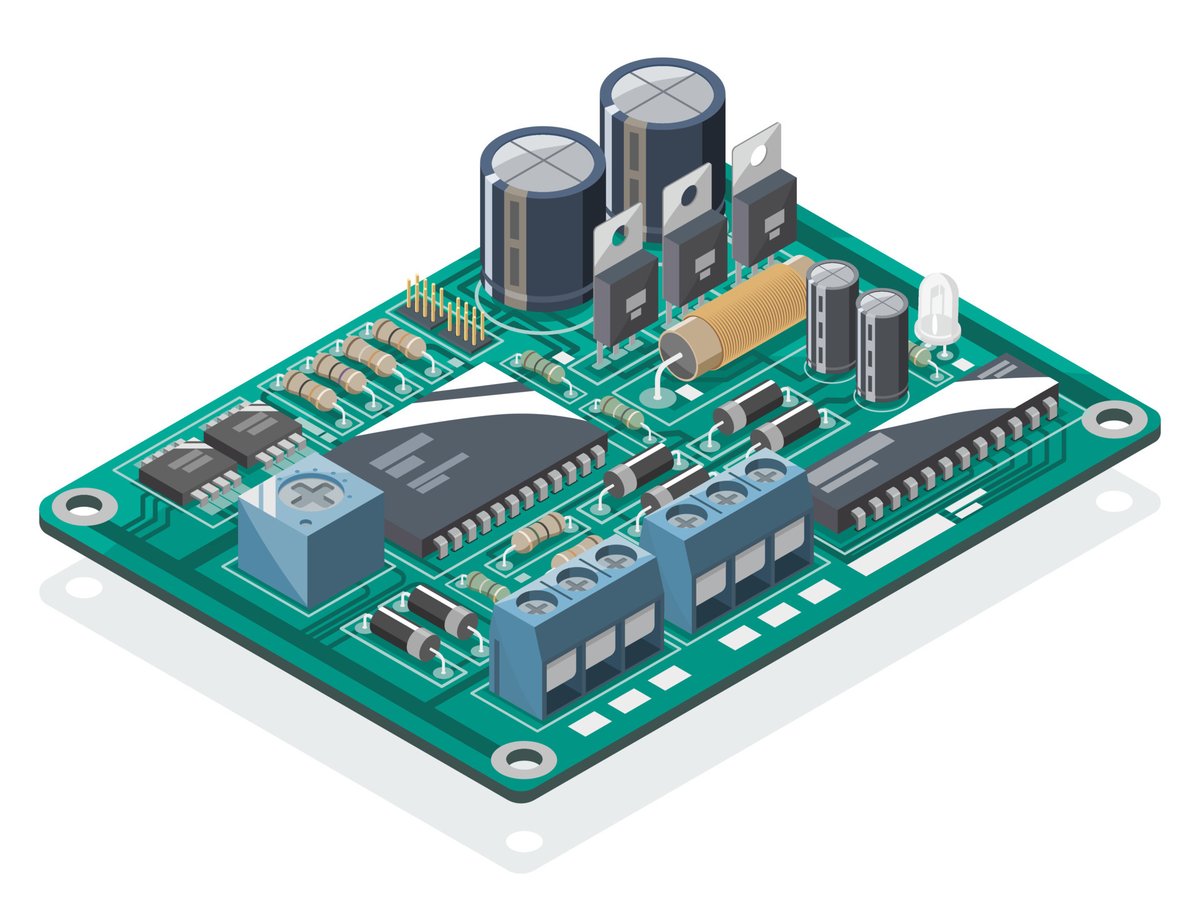
Ever looked at a circuit diagram and felt like you were staring at an alien language? You're not alone. The intricate dance of lines, squiggles, and arrows representing Electronic Components & Circuit Symbols can seem daunting at first glance. Yet, these symbols are the universal language of electronics – a precise shorthand that allows engineers, hobbyists, and technicians worldwide to communicate complex ideas with absolute clarity. Mastering them isn't just about memorizing shapes; it's about understanding the function each component plays in bringing an electronic design to life.
This guide isn't just a glossary; it's your decoder ring. We'll demystify these symbols, explain their purpose, and give you the confidence to interpret and even sketch your own circuit diagrams.
At a Glance: Your Quick Start Guide to Circuit Symbols
- Symbols are Universal: Standardized by bodies like IEEE and British Standard (BS 3939) for global understanding.
- Wires Connect: Lines represent connections, dots show joined wires, bridges for unjoined.
- Power Sources Energize: From simple cells to complex AC supplies, these symbols indicate how your circuit gets juice.
- Resistors Control Flow: They limit current, divide voltage, or change based on light/heat.
- Capacitors Store Energy: Think of them as tiny, fast-acting batteries or signal filters.
- Diodes Direct Current: They act as one-way valves, often lighting up (LEDs) or regulating voltage (Zener).
- Transistors Amplify & Switch: The workhorses of modern electronics, controlling larger currents with smaller signals.
- Logic Gates Make Decisions: The building blocks of digital computing, processing binary information.
- Meters Measure: Symbols for voltage, current, resistance, and signal visualization tools.
- Switches Redirect: From simple on/off to complex multi-throw configurations.
- Outputs Interact: Speakers make sound, lamps make light, motors make motion – all represented by specific symbols.
Why Symbols Matter: The Universal Language of Electronics
Imagine trying to build a house using only written descriptions of each brick, beam, and pipe. It would be chaos. Electronic circuits are no different. They are complex systems, and to design, build, or troubleshoot them efficiently, you need a clear, concise, and unambiguous representation. That's where circuit symbols come in.
These symbols aren't arbitrary doodles; they are a standardized pictographic language. Organizations like the IEEE (Institute of Electrical and Electronics Engineers) with their IEEE Std 315, and the British Standard (BS 3939), have worked to establish international norms. This standardization means a schematic drawn in Tokyo can be understood by an engineer in New York, fostering global collaboration and innovation. While minor variations might exist across different countries or specialized engineering fields, the core principles and most common symbols remain consistent. Understanding this universal language is the first step towards understanding basic circuit design and confidently navigating the world of electronics.
The Foundation: Wires and Connections
Every circuit begins with connections. Wires are the circulatory system, carrying electrical signals and power between components.
- Wires (Lines): The simplest symbol, a straight line, represents a conductive path – a wire. These lines are the backbone of any schematic, showing where electricity flows.
- Wires Joined (Dots): When two or more wires connect and are electrically common, a prominent dot or "blob" is placed at their intersection. This dot is crucial; it explicitly indicates a connection.
- Wires Not Joined (Bridging): If lines cross on a diagram but are not electrically connected, they are typically shown by "bridging" one line over the other, like an arch. Sometimes, they are simply drawn crossing without a dot, but bridging is often preferred to prevent any confusion, especially in complex schematics.
Fueling Your Circuits: Power Supply Symbols
No circuit works without power. These symbols show where your energy comes from and how it's managed.
- Cell: A single cell, like an AA battery, provides a specific voltage (e.g., 1.5V). Its symbol typically shows a long line (positive terminal) and a shorter, thicker line (negative terminal).
- Battery (B): A battery is simply two or more cells connected in series. The symbol reflects this with multiple cell representations, again with a clear positive (larger line) and negative (smaller line) terminal. Common battery voltages you'll encounter are 1.5V, 9V, or 12V.
- DC Power Supply: Direct Current (DC) means current flows in one consistent direction. A DC power supply symbol often resembles a battery but may have additional lines indicating a controlled source, sometimes with positive and negative terminals clearly marked. This is what you'd typically use to how to power your projects from a wall adapter.
- AC Power Supply: Alternating Current (AC) means the current continually reverses direction, often in a sinusoidal pattern. Its symbol is a circle with a sine wave inside. This is the type of power delivered to your home outlets.
- Fuse (F): A crucial safety device. A fuse symbol shows a wire that will "blow" or melt, breaking the circuit, if the current exceeds a specified safe limit. This protects more sensitive and expensive components downstream from damage due to overcurrent.
- Transformer (T): Used exclusively with AC power, a transformer symbol typically shows two coils (primary and secondary) separated by lines representing an iron core. Transformers transfer AC power between coils via mutual inductance without a direct physical connection. They can "step up" (increase) or "step down" (decrease) AC voltages, but they block DC current entirely.
- Ground (GND): This symbol, often depicted as a series of decreasing horizontal lines or an inverted triangle, represents the 0 volts reference point in a circuit. It can refer to the common return path for current (circuit ground) or, in larger systems (like radio or power circuits), the actual earth ground for safety and interference reduction.
Controlling the Flow: Resistors and Their Variants
Resistors are fundamental components, designed to oppose the flow of electric current. They're like bottlenecks in a water pipe, restricting the amount of water (current) that can pass through.
- Resistor (R): The most basic resistor symbol is a zig-zag line or a rectangular box (depending on regional standards). Its primary job is to restrict current flow. For instance, you'd place a resistor in series with an LED to limit the current and prevent the LED from burning out.
- Rheostat: A two-terminal variable resistor used to control current. Its symbol is a standard resistor with an arrow pointing to one of its ends, indicating variability. Think of it as a dimmer switch for a lamp – it directly changes the resistance in the path to adjust brightness. It's often used in applications like controlling motor speed or capacitor charge rates.
- Potentiometer (POT): A three-terminal variable resistor designed to control voltage. The symbol is similar to a rheostat but with an arrow pointing to a central, third contact (the "wiper"). By rotating a knob or sliding a lever, you can adjust the voltage picked off between the wiper and either end terminal. Potentiometers are commonly used in volume controls, joystick position sensing, or as transducers that convert mechanical motion into an electrical signal.
- Presets: These are small, low-cost variable resistors, often adjusted once with a screwdriver during the final calibration of a circuit. Their symbol is typically a resistor with an arrow passing through it at an angle, sometimes implying a fixed initial adjustment rather than user interaction.
- Light Dependent Resistor (LDR): An LDR's resistance changes based on the intensity of light falling on it. Its symbol is a resistor enclosed in a circle, with two arrows pointing inward, representing light. LDRs are commonly found in automatic streetlights or light-sensitive alarms.
- Thermistor (TH): A resistor whose resistance changes significantly with temperature. Its symbol is a resistor with a diagonal line and a 'T' (for temperature) inside or next to it. Thermistors are used in temperature sensors, thermostats, and fire alarms.
Storing and Filtering: Capacitors
Capacitors are fascinating components that store electrical energy in an electric field. They consist of two conductive plates separated by a non-conductive material called a dielectric.
- Capacitor (C): The basic capacitor symbol shows two parallel lines (plates) separated by a gap. Capacitors are excellent at filtering signals, blocking DC current while allowing AC current to pass through. This property makes them essential in smoothing out power supplies or timing circuits when paired with a resistor.
- Polarized Capacitor: Many capacitors, especially electrolytic ones, must be connected with the correct polarity (+ and -) to function properly and avoid damage. Their symbol typically shows one plate as a curved line and the other as a straight line, with the straight line usually marked with a plus sign (or the curved line indicating the negative terminal).
- Variable Capacitor: As the name suggests, the capacitance of this component can be changed, usually by rotating a shaft or knob. Its symbol is a standard capacitor with an arrow passing through it diagonally. You'll often find these in older radio receivers or transmitters for tuning frequencies, where air often serves as the dielectric.
- Trimmer Capacitor: A smaller version of a variable capacitor, designed for fine-tuning circuits. Like presets, they are usually adjusted once during calibration with a screwdriver or specialized tool. Their symbol is similar to a variable capacitor, but sometimes with a 'T' or a dashed arrow to denote its "trimmer" nature.
One-Way Streets and Light Shows: Diodes
Diodes are semiconductor devices that primarily allow electric current to flow in one direction only, like a one-way valve for electrons.
- Diode (D): The basic diode symbol is a triangle pointing towards a line (or bar). The current flows in the direction of the triangle (from the anode, the base of the triangle, to the cathode, the bar).
- LED (Light-Emitting Diode): A special type of diode that emits light when current passes through it in the forward direction. Its symbol is a standard diode with two arrows pointing away from it, indicating light emission. LEDs are ubiquitous, from indicator lights to modern lighting.
- Zener Diode (ZD): Unlike a regular diode, a Zener diode is designed to operate in reverse bias, maintaining a fixed, stable voltage across its terminals once a certain "breakdown voltage" is reached. Its symbol is similar to a standard diode, but with zig-zag or bent lines on the cathode side, resembling a 'Z'. They are invaluable for voltage regulation.
- Photodiode: This diode converts light into an electrical current or voltage. Its symbol is a diode with two arrows pointing towards it, indicating light detection. Photodiodes are used in light sensors, fiber optic receivers, and solar cells.
- Tunnel Diode: Known for its extremely fast operation due to quantum mechanical effects, the tunnel diode symbol has wings or specific angled lines on the cathode side. They are used in very high-frequency applications.
- Schottky Diode: Characterized by a very fast switching speed and a low forward voltage drop, the Schottky diode symbol has 'S'-shaped bends or specific angles on the cathode side. They are commonly used in high-frequency switching power supplies.
The Heart of Modern Electronics: Transistors
Transistors are the unsung heroes of modern electronics, acting as both switches and amplifiers. They are the fundamental building blocks of integrated circuits and microprocessors.
- NPN Transistor (Q): This bipolar junction transistor (BJT) consists of a P-doped semiconductor layer sandwiched between two N-doped layers (Emitter, Base, Collector). Its symbol shows a circle containing a vertical line, with a line for the base, and diagonal lines for the emitter and collector. The key identifier is the arrow on the emitter pointing out from the base. A small current at the base can control a much larger current flowing from collector to emitter.
- PNP Transistor (Q): Similar to the NPN, but with an N-doped layer between two P-doped layers. Its symbol is identical to the NPN, except the arrow on the emitter points in towards the base. PNP transistors operate with negative voltages relative to the emitter.
- Phototransistor: This device converts light into a corresponding electrical current, much like a bipolar transistor. Its symbol is a transistor (usually NPN) with two arrows pointing towards the base, indicating light activating the transistor. If the emitter is unconnected, it can function as a photodiode.
- FET (Field-Effect Transistor): FETs use an electric field to control the conductivity of a channel, governing current flow. They have three primary terminals: Gate, Source, and Drain.
- JFET (Junction Field Effect Transistor): The simplest type of FET.
- N-channel JFET: Its symbol shows a vertical channel with the gate attached centrally, and an arrow on the gate pointing in towards the channel. The source and drain lines are at either end of the channel.
- P-channel JFET: Similar to the N-channel, but the arrow on the gate points out from the channel.
JFETs are used in switching circuits and as voltage-variable resistors. - MOSFET (Metal-Oxide-Semiconductor Field-Effect Transistor): Known for low capacitance and high input impedance.
- e-MOSFET (Enhancement-mode MOSFET): Its symbol shows a broken channel line between source and drain, indicating that no channel exists until a voltage is applied to the gate. The gate is insulated from the channel.
- d-MOSFET (Depletion-mode MOSFET): Its symbol shows a continuous channel line between source and drain, as a channel is physically constructed during manufacturing. A voltage applied to the gate depletes or enhances this channel.
MOSFETs are widely used in digital circuits and power electronics due to their efficient switching capabilities.
Thinking in Ones and Zeros: Logic Gate Symbols
Logic gates are the fundamental building blocks of digital electronics, processing binary information (0s and 1s) based on logical rules. They have one or more inputs and a single output. These symbols are essential for applications of logic gates in microcontrollers and digital systems.
- AND Gate: Output is HIGH (1) only if all inputs are HIGH. Symbol looks like a "D" shape.
- NAND Gate (NOT AND): Output is LOW (0) only if all inputs are HIGH. Symbol is an AND gate with a small circle (inversion bubble) at the output.
- OR Gate: Output is HIGH if any input is HIGH. Symbol looks like a curved shield.
- NOR Gate (NOT OR): Output is HIGH only if all inputs are LOW. Symbol is an OR gate with an inversion bubble at the output.
- XOR Gate (Exclusive OR): Output is HIGH if the inputs are different. Symbol is an OR gate with an additional curved line at the input.
- XNOR Gate (Exclusive NOT OR): Output is HIGH if both inputs are the same (both LOW or both HIGH). Symbol is an XOR gate with an inversion bubble at the output.
- NOT Gate (Inverter Gate): Has only one input. It inverts the input (HIGH input gives LOW output, and vice-versa). Symbol is a triangle with an inversion bubble at the output.
Seeing the Unseen: Measuring Instruments
To understand and troubleshoot circuits, you need to measure their electrical properties. These symbols represent the tools of the trade.
- Voltmeter: Measures voltage (potential difference) across two points in a circuit. Symbol: A circle with a 'V' inside. Connected in parallel.
- Ammeter: Measures the current flowing through a circuit at a particular point. Symbol: A circle with an 'A' inside. Connected in series.
- Galvanometer: A sensitive meter used to detect and measure very small currents, often in the microampere or milliampere range. Symbol: A circle with a 'G' inside.
- Ohmmeter: Measures electrical resistance. Symbol: A circle with the Greek letter Omega (Ω) inside.
- Oscilloscope: A powerful instrument that displays the voltage of a signal over time, allowing engineers to visualize waveforms, measure frequencies, and detect anomalies. Its symbol is often a stylized screen showing a waveform, or sometimes a circle with a unique pattern inside. Crucial for signal processing fundamentals.
Directing Traffic: Switches and Relays
Switches are electromechanical components that make or break connections, controlling the flow of current.
- Push-to-make Switch (Normally Open - NO): Current flows only when the button is pressed. Symbol shows two contacts that close when activated.
- Push-to-break Switch (Normally Closed - NC): Current normally flows, but the circuit breaks (opens) when the button is pressed. Symbol shows two contacts that open when activated.
- SPST Switch (Single-Pole, Single-Throw): The most common ON/OFF switch. It controls a single circuit ("single pole") and has only two positions ("single throw" - on or off). Symbol shows a simple lever connecting or disconnecting one path.
- SPDT Switch (Single-Pole, Double-Throw): Also known as a 2-way switch or ON/OFF/ON. It controls a single circuit but can direct current to one of two different paths. Symbol shows a lever that can connect to one of two contacts.
- DPST Switch (Double-Pole, Single-Throw): Essentially two SPST switches operated by a single mechanism. Used to switch two separate circuits simultaneously, or to isolate both live and neutral lines in AC mains. Symbol shows two identical SPST switches linked mechanically.
- DPDT Switch (Double-Pole, Double-Throw): Two SPDT switches operated together. Often has a central OFF position and is used in applications like reversing the polarity for a DC motor. Symbol shows two identical SPDT switches linked mechanically.
- Relay (RY): An electrically operated switch. A small current in its coil creates a magnetic field that physically moves contacts, switching a larger current or voltage (e.g., 230V AC mains). Symbol typically shows a coil and a set of contacts (Normally Open, Normally Closed, and Common), allowing for remote or automated control.
Engaging the Senses: Audio, Radio, and Output Devices
These components convert electrical signals into forms we can perceive (sound, light, motion) or interact with the outside world.
- Microphone (MIC): A transducer that converts sound waves into electrical energy. Symbol: A circle with a diagonal line inside, often pointing towards a small line, representing the diaphragm.
- Earphone/Headphone: Converts electrical energy back into sound, designed for individual listening. Symbol: Two circles with lines pointing to a central connection, resembling ear-worn devices.
- Speaker: Converts electrical energy into audible sound, typically for a wider audience. Produces a broader range of audio frequencies than a simple piezo-transducer. Symbol: A circle with a cone shape inside.
- Piezo-Transducer: Converts electrical energy into tone sounds, often for alarms or simple audio cues. Symbol: Two plates with a zigzag line between them, indicating the piezoelectric material.
- Buzzer: Produces a loud, often single-frequency tone, typically around 1500 Hz, for alerts. Symbol: A circle with an arc and a 'Z' or a vibrating element indication.
- Amplifier: A circuit or component that increases the power or amplitude of an electrical signal. Symbol: A triangle, with the input usually on the left and output on the right.
- Antenna (AE): Used to transmit or receive electromagnetic signals (radio waves). Symbol: A vertical line with a horizontal bar at the top, or various specific shapes depending on the antenna type.
- XTAL Crystals: Quartz crystals used in electronic oscillator circuits to generate precise, stable frequencies. They utilize the mechanical resonance of a vibrating piezoelectric crystal. Symbol: A rectangle with diagonal lines inside, connected to two terminals.
Output Devices: Making Things Happen
Beyond audio, other components act as transducers, converting electrical energy into other forms like light, heat, or mechanical motion.
- Lamp/Indicator: A general symbol for a device that converts electrical energy into light, often for signaling or warnings. Symbol: A circle with a cross inside. Think of a warning light on a car dashboard.
- Globe: A specific symbol for an incandescent light bulb, a fine wire (filament) inside a glass bulb that glows when heated by current. Symbol: A circle with a loop inside, representing the filament.
- Heater: A transducer that converts electrical energy primarily into heat. Symbol: Often a rectangular box with zig-zag lines, similar to a resistor but often larger or with additional markings.
- Inductor (L): A coil of wire that stores energy in a magnetic field when current passes through it. Its symbol is a series of loops or coils. Inductors oppose changes in current and are used in filters, tuning circuits, motors, and transformers. They can also convert electrical energy into mechanical energy by pulling on ferrous materials.
- Motor (M): Converts electrical energy into mechanical energy (rotational motion). Symbol: A circle with an 'M' inside. Motors are versatile and can also act as generators, converting mechanical energy back into electrical energy. When considering choosing the right sensor or actuator, motors are key output devices.
Bringing It All Together: From Symbols to Schematics
Understanding individual electronic components and circuit symbols is a monumental first step. But the true power lies in their combination – in the schematic diagram. A schematic is more than just a collection of symbols; it's a blueprint, a narrative of electron flow, and the silent instruction manual for building or troubleshooting an electronic device. You can see many examples of how these symbols interact by exploring a comprehensive Electrical symbols diagram.
As you progress, you'll encounter more complex symbols for integrated circuits (ICs), microcontrollers, and specialized sensors. The principles, however, remain constant: each symbol represents a specific function, and their arrangement dictates the circuit's behavior.
Start by drawing simple circuits you understand: a battery, a switch, and an LED with a resistor. Practice interpreting existing diagrams. Don't be afraid to make mistakes; they are part of the learning process. With practice, these arcane symbols will transform into a clear, concise language, empowering you to design, build, and innovate in the exciting world of electronics. Your journey into circuit design has just begun – keep learning, keep building!